
Liberty County Arrest to Court Record
The court record after a Liberty County jail arrest is not created by the roster alone. A person is arrested, booked at Liberty County Jail, taken before a magistrate without unnecessary delay under Texas Code of Criminal Procedure Article 15.17, and then the prosecutor or court process determines what formal charge record exists. A booking charge can change. It can be declined, amended, reduced, enhanced, indicted differently, or dismissed.
The jail roster is still the best first clue. It can identify the person, arrest date, arresting agency, and bond field. Those details help match the booking to the later court case. For custody and booking details, the Liberty County jail inmate records page gives the roster path. For booking-photo questions, the Liberty County jail mugshots page covers photo access.
Process flow: Arrest to Liberty County Jail booking to magistrate or bond event to prosecutor review to complaint, information, indictment, plea, trial, dismissal, or other disposition.
Liberty County Court Record Routing
Liberty County routing depends on case type. The District Clerk page points users to iDocket for district-court cases and notes that a public-view kiosk is available in the District Clerk's Office. The NextRequest FAQ routes felonies, family-law-related cases, tax cases, and district civil cases to the District Clerk. It routes probate, misdemeanors, juvenile cases, and County Court at Law civil cases to the County Clerk.
| Case Type | Likely Office | Research-backed Channel |
|---|---|---|
| Felony after arrest | District Clerk | District Clerk page and iDocket |
| Misdemeanor after arrest | County Clerk | County Clerk page |
| Jail bond records | Odyssey Public Access | Odyssey Public Access jail records |
| Formal public request | County or proper custodian | NextRequest portal |
The Liberty County District Clerk page captured below is important because it identifies iDocket and kiosk access for district-court records.
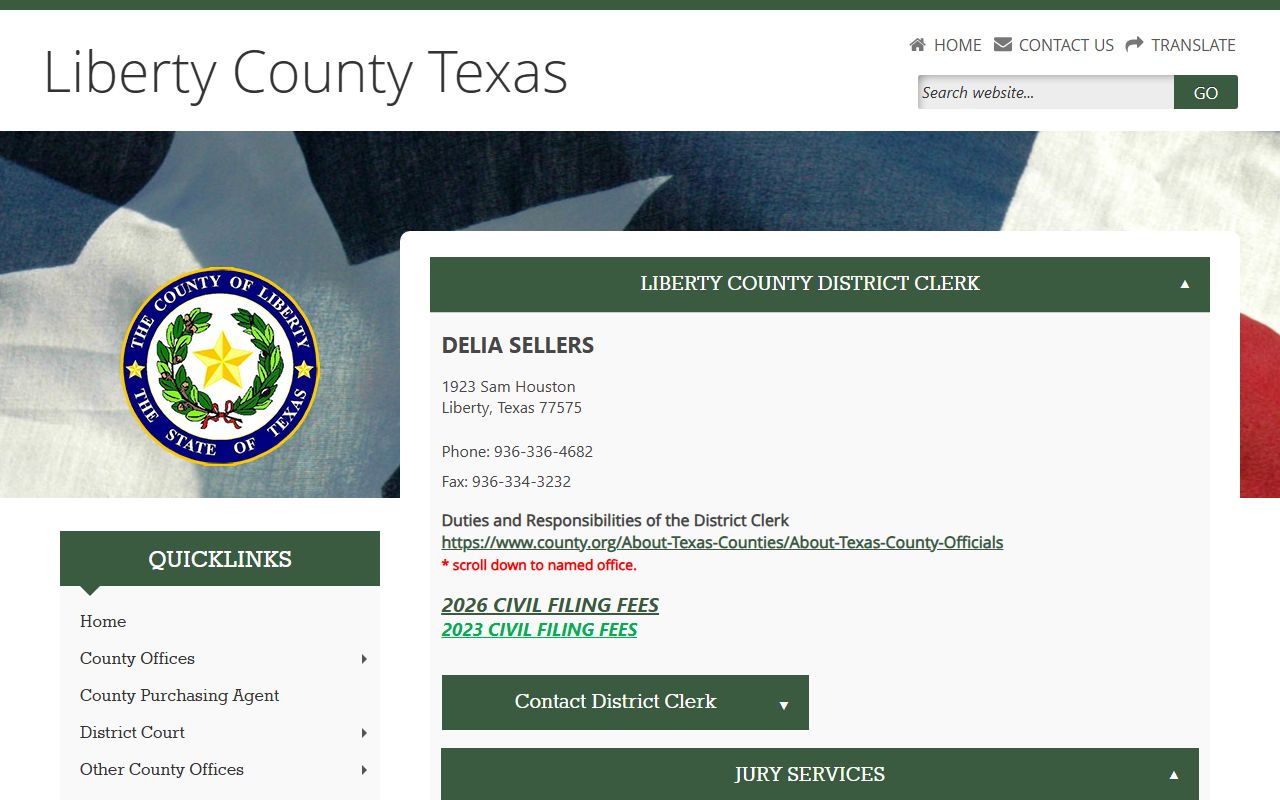
Use that district-court route for felony matters and other district-court cases, then use the County Clerk route for misdemeanor and county-level matters.
Liberty County Charging Records
A court record after arrest may start with different charging documents. The label matters because it tells the reader whether the case is early, prosecutor-filed, or grand-jury charged. It also helps separate a booking allegation from a filed criminal case.
| Document | Plain Meaning | Common Use |
|---|---|---|
| Complaint | A written accusation that can begin or support a criminal charge. | Early charging or misdemeanor contexts. |
| Information | A prosecutor-filed charging document. | Non-indictment prosecution where permitted. |
| Indictment | A grand-jury charging instrument. | Common for felony prosecution. |
The Liberty County District Attorney, Hon. Jennifer L. Bergman, is the prosecutor office involved after arrest, but the DA is not the public clerk for every court file. The DA page lists the office at 1923 Sam Houston, Suite 112, Liberty, Texas 77575, with phone numbers 936-336-4609 and 936-336-4610. Defense-attorney discovery enrollment is a separate DA-office function.
Liberty County Charge Status Terms
Charge status is often misunderstood. A charge can appear on the jail roster before it appears as a filed court case. It can also remain pending for some time after bond is posted. A court disposition is the event that shows how the case or count ended.
| Status | What It Usually Means |
|---|---|
| Pending | The case or charge is open and unresolved. |
| Dismissed | The charge ended without conviction on that count. |
| Reduced or amended | The filed charge changed after review. |
| Deferred adjudication | A court outcome with conditions and special record consequences. |
| Conviction | A final finding or plea resulting in conviction on the count. |
- Charge
- An accusation or filed count. It is not proof of guilt.
- Conviction
- A final court result after plea, verdict, or other legal process.
- Disposition
- The final outcome or current ending status for a case or count.
Liberty County Bond Records After Arrest
Texas bond practice is governed mainly by Code of Criminal Procedure Chapter 17 and local court handling. The Liberty County roster can show bond values, NOT SET, or DENIED. The Odyssey Public Access landing page also lists Jail Records and Jail Bond Records, but the research did not confirm a full static case-search form from that landing page. Treat it as a records access channel, not as a live release instruction page.
The Odyssey Public Access landing page captured below lists Liberty County jail-record and jail-bond record access.
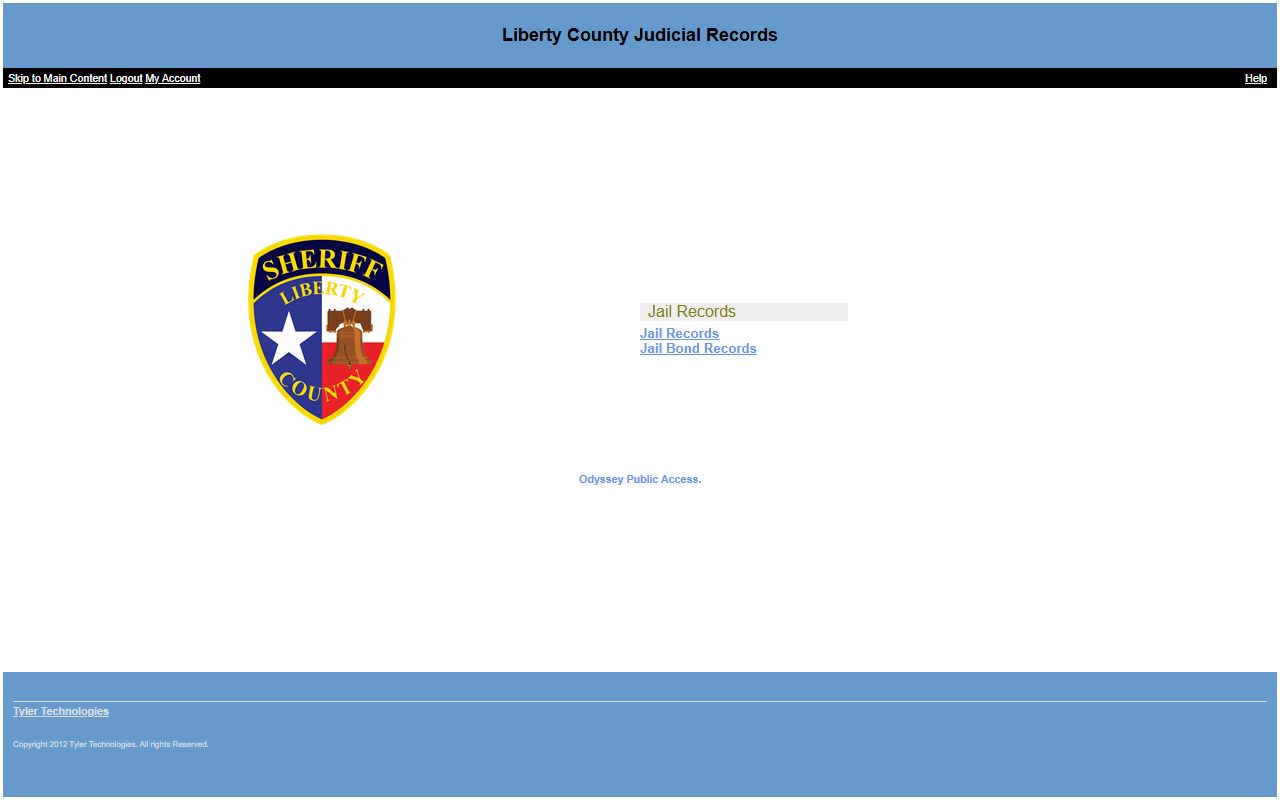
Before paying a bondsman or traveling to post bond, call Liberty County Jail to confirm current bond amount, acceptable payment path, posting location, and any holds.
Liberty County Warrants and Capias
The Liberty County Sheriff's Office has a Warrants page, but the research did not confirm a complete public active-warrant database with field labels. A warrant-related arrest may lead to a jail booking, a bond field, a no-bond hold, or an outside-agency hold. If the warrant came from another court or county, local release can depend on the issuing agency.
- Arrest warrant: judge-issued order authorizing arrest.
- Bench warrant or capias: court process often tied to missed appearances or court orders.
- Fugitive or out-of-county warrant: can keep a person in Liberty County custody for another jurisdiction.
- Parole or probation warrant: can create a hold even when local bond appears available.
Liberty County Sealed or Expunged Records
Texas expunction and nondisclosure are different. Expunction under Code of Criminal Procedure Chapter 55 can remove qualifying arrest records through a court process. Nondisclosure limits public access to certain criminal-history information but does not erase every record from every official system. A dismissed charge, acquittal, deferred outcome, or completed probation does not automatically remove a Liberty County booking record from all sources.
| Record Concept | Effect | Important Limit |
|---|---|---|
| Expunction | Can require qualifying records to be destroyed or removed from access. | Requires eligibility and a court order. |
| Nondisclosure | Limits public release of certain criminal-history data. | Does not work like a full expunction. |
| Commercial removal | Texas Business and Commerce Code Chapter 109 can affect covered publishers. | Different from ordering the county to delete official records. |
Request Liberty County Court Records
When online portals do not answer the question, contact the correct clerk or use the formal public-information route. The county public-information page says documents may be viewed for free in the County Clerk's Office or District Clerk's Office. It also notes certified copies are an additional $5 per document plus $1 per page. Include the person's name, date of birth if known, arrest date, case number if known, and the document requested.
- Start with jail roster details to identify the booking.
- Decide whether the matter is likely felony or misdemeanor.
- Search district records through iDocket for district-court matters.
- Contact the County Clerk for misdemeanor, probate, juvenile, or county-court-at-law routing.
- Use NextRequest for a public-information request when the custodian or document path is not clear.
The Liberty County District Attorney page identifies prosecutor-office contact details and defense-attorney discovery notice.
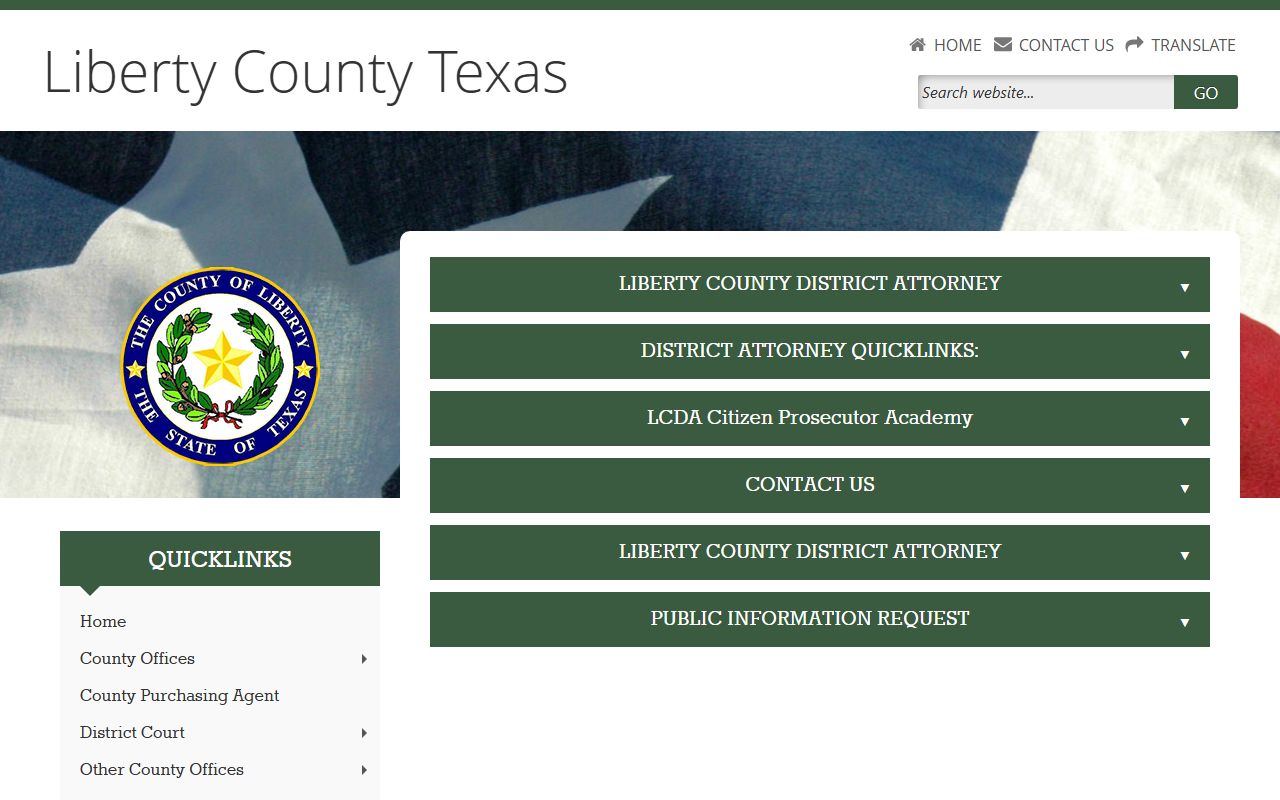
Use the DA information for prosecutor-office routing, not as a replacement for clerk records or jail custody confirmation.
Liberty County Case Timing
A very recent arrest may appear in the jail roster before a court case is easy to find. That gap is normal because booking, magistrate warnings, prosecutor review, and clerk filing are separate events. If no case appears, save the arrest date and agency from the roster and search again after initial processing, then contact the proper clerk if the charge level is known.
Do not treat the roster charge as a final conviction. The formal court record controls filed charges and disposition. The jail record helps identify the arrest event, while the clerk record shows what the court received and how the case moved.
Public Record Search
Sponsored Results